


Welcome to Summer One.
It is the final few weeks of revision before we complete our SATs the week beginning the 11th May, and then we will introduce our production to the children which we will perform in Summer Two, but there is lots of learning to do across the curriculum over the next six weeks.
English
In our English lessons, we will be developing our understanding of fairytales using the Phillip Pullman Grimm Tales anthology. We will then expand on the concepts learnt to embellish our stories and create adventure and fantasy stories.
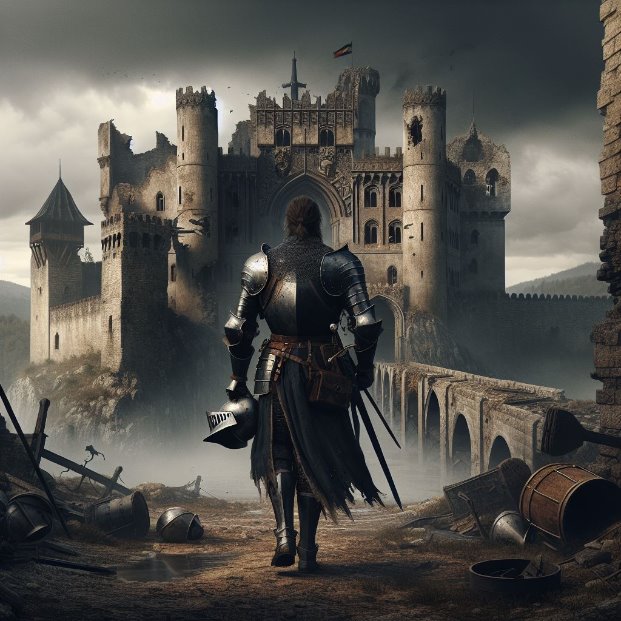 Using model texts and images, we will look at creating our own fantasy worlds and introducing some of our own imaginative characters. To do this we will need to develop our understanding of language, choosing specific adjectives and verbs to create the desired effect and mood in our writing.
We will also be using flashbacks in our story and understanding how these can help explain situations which are happening in the present or act as things which could foreshadow what is to come.
Maths
Our maths lessons will focus on position and direction, understanding how the co-ordinates are used to explain the position of shapes and how these can be reflected (mirror image) or translated (moved with the same dimensions).
After securing position and direction, we will continue to focus on embedding all of our knowledge from Key Stage Two in preparation for our SATs tests: improving our fluency whilst using the four operations and developing our understanding of these within contexts when problem-solving or completing reasoning problems.
History
In our history lessons, we move the focus from the Second World War which we studied across the Spring Term and look at the events following 1945. We will explore the Cold War period and the arms and space races which dominated much of the time.
The Cold War was a period of tension between the capitalist democracies of the western world and communist countries of Eastern Europe. The Cold War began in the 1940s and lasted until the collapse of the Soviet Union in 1991. The Cold War was led by the ‘Superpowers’–with the US leading the west, and the Soviet Union (USSR) the east.
The tensions between the two superpowers originated from their opposite ideologies – the USA being capitalist, and the Soviet Union was communist. After World War II, the Soviet Union operated a policy of ‘expansionism’ to attempt to spread communism across Eastern Europe. The US and its allies in the west wanted to stop communism spreading and operated a policy of ‘containment.’
Although the countries never officially declared war on each other, they fought in ‘proxy wars’, joining opposite sides of wars being fought by other countries. Examples of proxy wars include the Korean War, the Vietnam War, the Yom Kippur War, and the Soviet Afghanistan War.
The US and the Soviet Union also fought to become the most powerful and technologically advanced. Each side competed to have the most advanced weapons, including nuclear bombs. This was known as the ‘arms race’.
Geography
We move our focus across the Atlantic Ocean from South America to the continent of Africa. In ancient times, when Europe was in what is known as the ‘dark ages’, three important empires rose and fell in West Africa. At this time, the Sahara Desert was almost inaccessible, apart from a few trade routes. It was the spread of Islam which encouraged more trade: West Africa was rich in gold whilst North Africa was rich in salt, a commodity that was highly valued as it could be used to preserve food. Traders used camels to carry bars of salt across the Sahara to Western Africa where they could trade them for gold.
Malian merchants were also trading ivory, ostrich feathers, kola nuts, animal hides and slaves. During the time of the Empire of Mali, there lived a man who is now known to be the richest man who has ever lived. In Timbuktu, a city in Mali that was important during the Mali Empire, a man called Mansa Kankan Musa, known as Mansa Musa (Mansa meaning Emperor) began his pilgrimage to Mecca and learnt many things on the way.
We will also look at the green belt and how people are working together to control the desertification of Africa and keep the Sahara Desert from expanding further.
RE
We are exploring the question: Does belief in Akhirah (life after death) help Muslims lead good lives?
Akhirah is the term used in Islam to describe the belief in everlasting life after death. Muslims regard life on Earth as a test from Allah, to prepare them for eternal life. We will look at how the Five Pillars of Islam and understand how these along with the 8 doors to heaven inspire Muslims to lead good lives.
Science
We are studying reproduction this half-term. We will be looking at how plants and animals reproduce. Some require only one parent known as asexual reproduction, whilst others require a male and a female parent called sexual reproduction. Some animals will have their offspring outside their body, such as a fish laying eggs which are then fertilised.