







Welcome to Magpies Summer Two
This half term in Year 3, children will continue to build confidence and independence across the curriculum through a range of engaging and practical learning opportunities. Please read below for further information.
Computing – Programming: Events and Actions
In Computing this term, children will develop their understanding of programming by learning how events and actions work together. An event is something that happens, such as pressing a button, and an action is what the program does in response. Pupils will use Scratch to create programs by joining together blocks, where each block is an instruction that forms part of a sequence.
Children will learn that a program begins with an event block, for example when the green flag is clicked, and that the blocks must be connected in the correct order to make the program run successfully. They will control a sprite, which is a character on the screen, and explore how it can move in different directions using commands and angles. They will also learn that algorithms are step-by-step instructions used to design programs before they are created.
As their confidence grows, pupils will test and improve their work by debugging, which means finding and fixing mistakes. They will check that blocks are connected correctly, that values are accurate and that the correct event has been used. By the end of the unit, children will have created their own simple programs and will be able to explain how events and actions work together to create an outcome.
Design and Technology – Puppets
In Design and Technology, children will design and create their own puppets using felt and other materials. They will follow the design process carefully, beginning by looking at existing products, creating their own design and then making and evaluating their final piece.
Pupils will learn that a design is a plan that shows how a product will look and work, and that the purpose explains why it is being made. They will also think about aesthetic qualities, which focus on how the puppet looks, including colour and shape. Children will explore different types of puppets, such as hand puppets and finger puppets, and consider how they are used.
As part of the making process, children will learn how to join fabric together using stitches. They will practise running stitch and backstitch, learning that a seam is where two pieces of fabric are joined. They will select tools such as needles, thread and scissors and learn how to use them safely to cut, shape and assemble their puppet.
At the end of the unit, children will evaluate their work by explaining what went well and what could be improved. This helps them understand that all designs can be developed further and improved over time.
English – Stories and Poetry
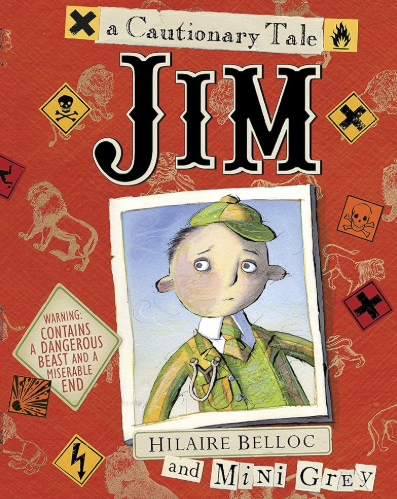
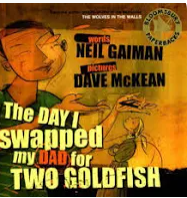
In English this term, children will explore imaginative and engaging texts including Jim: A Cautionary Tale and The Day I Swapped My Dad for Two Goldfish.
They will build their reading skills by discussing characters, identifying key ideas and explaining what might happen next.
Children will write for a range of purposes, including diary entries, letters, poems and narratives. When writing a diary entry, they will learn to include dates, write in the first person and describe events in time order, while also including thoughts and feelings.
They will develop their writing using a wide range of vocabulary and sentence structures. Pupils will learn how to use coordinating conjunctions such as for, and, but and so, and subordinating conjunctions such as because, when and although. They will also practise writing dialogue, using inverted commas to show direct speech accurately.
Children will learn how to organise their writing into paragraphs by thinking about changes in time, place, topic or speaker. They will also explore how prefixes and suffixes can change the meaning of words, helping them to expand their vocabulary.
By the end of the unit, pupils will be able to write longer pieces with a clear structure, using a range of grammatical features and punctuation accurately.
French – Les Glaces (Ice Creams)
In French this term, children will build confidence in speaking and understanding a new language through the topic of ice creams. They will learn to recognise, recall and pronounce a range of ice cream flavours, making links between French and English words where possible.
Children will practise key phonics patterns and begin to understand that some letters in French are silent. They will also learn how French nouns can be masculine or feminine, which affects the words used alongside them.
As the unit progresses, pupils will build simple sentences using the phrase “je voudrais,” meaning “I would like.” They will extend these sentences by saying whether they would like a cone or a cup and how many scoops they would like. By the end of the unit, children will take part in a short role-play to order an ice cream in French, showing growing confidence in speaking.
Geography – Rivers
In Geography, children will explore rivers in depth and develop a clear understanding of how they are formed, how they flow and why they are important. They will learn that a river begins at its source and flows towards its mouth, where it joins the sea or another body of water.
Children will learn and use a wide range of geographical vocabulary, including terms such as tributary and confluence. They will explore how rivers change as they move through their upper, middle and lower courses, noticing features such as meanders and floodplains.
The unit makes strong links to the local area, where pupils will study the River Little Ouse and the River Thet in Brandon. They will compare these with rivers in the UK and around the world, including the River Nile and the Amazon. By the end, children will understand the importance of rivers for people and the environment.
History – Anglo-Saxons, Scots and Vikings
In History, children will explore life in Britain after the Romans left in AD 410, when the Anglo-Saxons migrated from parts of Europe and settled in England. They will learn how the country was divided into kingdoms and ruled by kings.
Children will then learn about Viking life, understanding that Vikings were explorers, traders and settlers as well as raiders. They will explore how and why Vikings came to Britain and how they settled in places such as the Danelaw.
Pupils will develop historical enquiry skills by using evidence to ask and answer questions about the past. By the end of the unit, they will understand how these groups shaped early British history.
Life Skills – What Do We Spend Money On?
In Life Skills, children will develop a practical understanding of money and how it is used. They will explore coins, notes and digital payment methods, and learn how money can be stored in a bank account and accessed through cards.
Children will understand the difference between debit and credit cards and explore how people earn money through jobs. They will begin to understand how people make decisions about spending, including the difference between needs and wants.
The unit also explores how spending choices affect the environment, encouraging children to think about reducing, reusing and recycling. By the end, pupils will understand how to use money responsibly and safely.
Mathematics – Time, Shape and Data
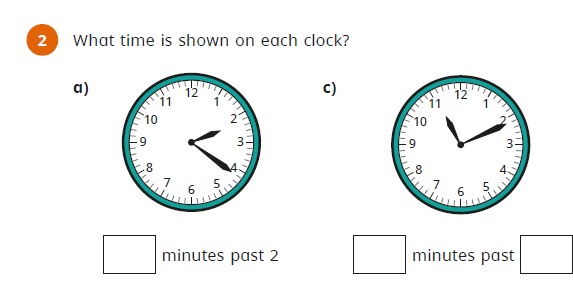
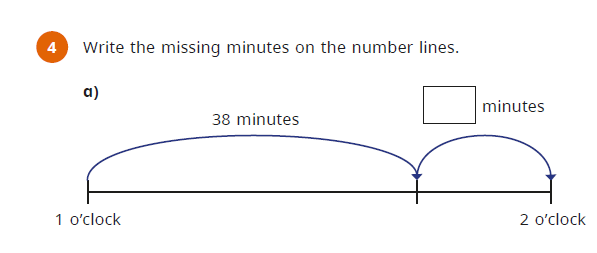
In Mathematics, children will develop their understanding of time, shape and statistics. They will learn about units of time and how they are linked, including seconds, minutes, hours, days and years.
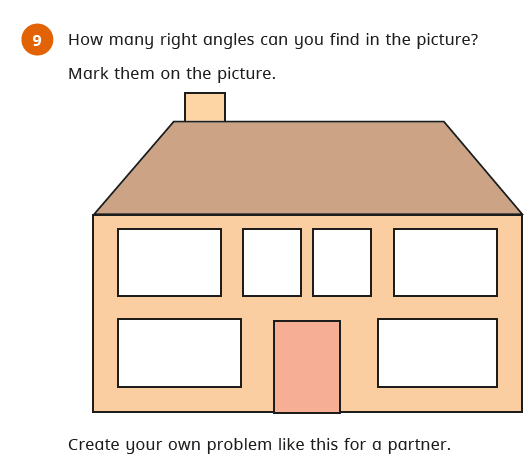
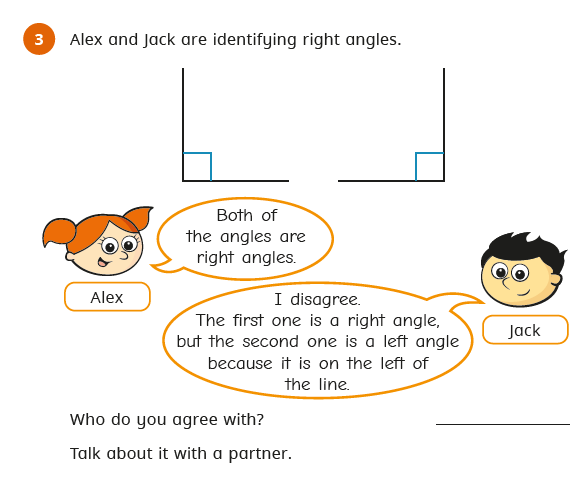
Children will explore the properties of shapes, including sides, angles and vertices, and will learn about symmetry. They will also learn about different types of lines and angles, including right angles, acute angles and obtuse angles.
In statistics, pupils will collect and interpret data using pictograms and bar charts. By the end of the unit, they will be able to answer questions and draw conclusions from the data they present.
Music – More Musical Styles
In Music this term, children will explore a range of musical styles, including gospel, pop and hip hop. They will listen to different pieces of music and begin to describe how they sound.
Children will learn about tempo, time signatures and key signatures, helping them understand how music is structured. They will sing, play instruments and create their own simple musical ideas.
By the end of the unit, pupils will perform confidently and begin to talk about music using appropriate vocabulary.
Physical Education – Tennis and Cricket
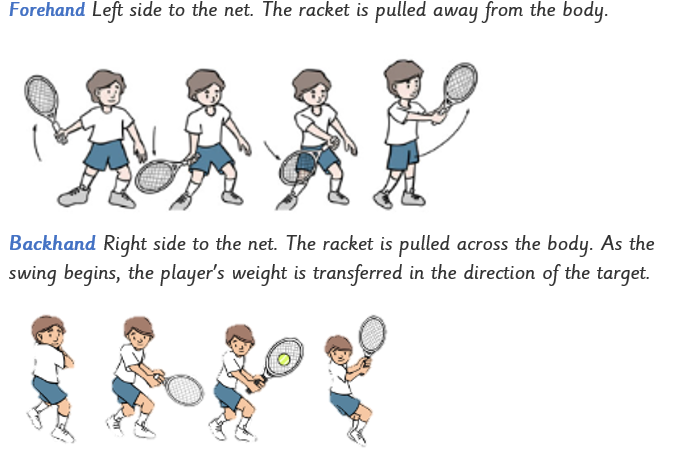
In Physical Education, children will develop skills in tennis and cricket. In tennis, they will learn techniques such as forehand and backhand shots, as well as how to rally with a partner and control the direction of the ball.
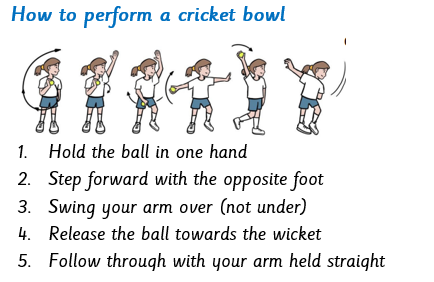
Children will improve their footwork and begin to use simple tactics, as well as learning the basic rules of the game. In cricket, they will practise batting, bowling, fielding, throwing and catching.
They will learn how games are organised, including how runs are scored and the role of the umpire. Throughout the unit, children will develop teamwork, communication and confidence in physical activity.
Religious Education – Hinduism
In Religious Education this term, children will develop their understanding of Hinduism by exploring key beliefs and practices. They will learn about Brahman as a supreme power and how Hindus worship through different gods and goddesses.
Children will explore ideas such as karma and reincarnation and understand how these beliefs influence daily life. They will learn about worship at home and in temples, and the importance of special objects and rituals.
The unit will also include learning about Diwali and its meaning. By the end, pupils will be able to describe key beliefs and show respect for different religions and cultures.
Science – Forces and Magnets
In Science, children will explore how forces affect movement. They will learn that forces are pushes and pulls and that they can change how objects move.
Children will investigate friction and understand how different surfaces affect movement. They will also learn about magnets, including how they attract and repel certain materials.
Pupils will explore magnetic poles and understand that magnets can act at a distance through a magnetic field. By the end of the unit, children will be able to explain how forces and magnets work using scientific vocabulary.